
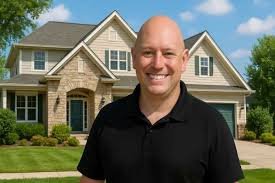
By Duane Buziak, Mortgage Maestro, NMLS#1110647
On a $350,000 home, the gap between 3% down and 10% down is $24,500. At 3% down, your down payment is $10,500. At 10% down, it is $35,000. Even if the lower-down-payment option adds about $180 a month once mortgage insurance is factored in, that is roughly $10,800 over five years – still far less than the extra cash needed upfront. That is why so many buyers ask how to buy a house with low down payment without getting trapped in the wrong loan.
The short answer is yes, you can do it. The better answer is that low down payment works best when the loan program matches your credit profile, income type, property location, and how long you expect to keep the home.
How to buy a house with low down payment
If you are buying in Virginia, Tennessee, Georgia, or Florida, the main low-down-payment paths are conventional 3% down, FHA at 3.5% down, VA at 0% down for eligible veterans and service members, and USDA at 0% down in eligible rural areas. Each option solves a different problem.
A conventional 3% down loan usually fits buyers with stronger credit and stable income. FHA is often more forgiving on credit scores and debt ratios. VA can be the strongest value if you qualify because there is no monthly mortgage insurance. USDA can also be excellent, but the property has to meet location rules.
For 2025, the baseline conforming loan limit in most counties is $806,500, which matters because pricing and underwriting usually improve when you stay inside conforming limits. In much of central Virginia, that limit is more than enough for a median-priced home. In Henrico County, recent median sale prices have generally landed in the upper $300,000s to low $400,000s depending on season and source. In Chesterfield County, many median sales have tracked around the mid-$300,000s. In Virginia Beach, it is common to see median values around the high $300,000s to low $400,000s. In Knoxville-area Tennessee markets, many median prices remain below those Virginia coastal figures, while parts of Florida and Georgia can vary sharply by county and insurance costs.
That local context matters. A 3% down payment on a $385,000 home is $11,550. A 3.5% FHA down payment is $13,475. Those are reachable numbers for many households that cannot set aside $77,000 for 20% down.
Low down payment loan options compared
| Loan type | Minimum down payment | Typical minimum credit score | Mortgage insurance or fee | Best fit | | — | — | — | — | — | | Conventional | 3% | Often 620, stronger pricing at 680+ | Private mortgage insurance if under 20% down | Buyers with solid credit and standard income | | FHA | 3.5% | Often 580 with qualifying factors | Upfront and monthly mortgage insurance | Buyers needing more flexible credit rules | | VA | 0% | No official minimum, many lenders look for 580-620+ | Funding fee, no monthly MI | Eligible veterans, active-duty, some surviving spouses | | USDA | 0% | Often 640 for streamlined approvals | Upfront guarantee fee and annual fee | Buyers in eligible rural areas | | Jumbo low-down options | 5%-10% in many cases | Often 700+ | Varies by lender | Higher-priced homes with strong reserves |
The trade-off is simple. Lower down payment preserves cash, but monthly payment usually rises because the loan amount is higher and mortgage insurance may apply.
What low down payment really costs each month
Buyers often focus too hard on the down payment and not enough on the full monthly picture. Principal and interest are only part of it. Property taxes, homeowners insurance, mortgage insurance, and in some Florida coastal markets, much higher hazard and wind coverage, can change the math fast.
On a $400,000 purchase with 3% down, you borrow about $388,000 before financed fees. On a similar home with 10% down, you borrow about $360,000. That loan gap alone can move the payment by a few hundred dollars a month depending on rate. Add private mortgage insurance, and the low-down-payment option may cost materially more each month. But if keeping an extra $28,000 in savings avoids wiping out your emergency fund, the higher payment may still be the safer choice.
Closing costs matter too. In Virginia, Tennessee, Georgia, and Florida, a practical working range is often 2% to 5% of the purchase price, depending on taxes, title charges, prepaid escrows, and whether discount points are used. On a $375,000 purchase, that can mean about $7,500 to $18,750. Sellers can sometimes contribute toward closing costs, but the allowed amount depends on the loan type and your down payment.
Credit score, reserves, and income rules
Most buyers can buy a house with low down payment sooner than they think, but approval hinges on the full file, not just one score.
For conventional loans, 620 is a common floor, but 680, 700, and 740 are where pricing usually gets meaningfully better. FHA is commonly available at 580 with 3.5% down, though lower scores can trigger tighter overlays or stronger compensating factors. VA has no government-set minimum score, but many lenders want at least 580 to 620. Self-employed borrowers may need one or two years of tax returns unless they use a bank statement or non-QM option.
Reserves are another overlooked issue. Many standard owner-occupied low-down-payment loans do not require large reserves, but stronger files often help. Jumbo loans may require 6 to 12 months of reserves. Investment and DSCR loans can also require more cash on hand than an owner-occupied FHA or conventional file.
If you have nontraditional income, the program choice matters as much as the rate. A W-2 borrower with a 720 score and low debt may fit conventional 3% down beautifully. A self-employed buyer writing off heavily may find FHA or a bank statement route more realistic, even if the rate is higher.
A practical 6-step roadmap
- Start with a soft-pull prequalification. That lets you review estimated buying power without the immediate hit of a hard inquiry.
- Set a true monthly comfort number. Include taxes, insurance, HOA dues, and mortgage insurance – not just principal and interest.
- Compare FHA, conventional 3% down, VA, and USDA side by side. The cheapest rate is not always the cheapest payment or lowest five-year cost.
- Price the cash to close, not only the down payment. Closing costs can change your strategy more than the rate.
- Check the property against the loan. Condos, multi-unit homes, and rural addresses can shift program eligibility.
- Stress-test the file before you shop. Review credit score, debt-to-income ratio, reserves, and documentation early so you can move fast when the right house appears.
FHA vs conventional for low down payment buyers
This is the most common fork in the road.
FHA usually wins on flexibility. Debt ratios can be more forgiving, and buyers with bruised credit often get approved faster. The cost is mortgage insurance. FHA includes both an upfront mortgage insurance premium and monthly mortgage insurance, and in many cases that monthly charge lasts much longer than borrowers expect.
Conventional usually wins for buyers with better credit. If your score is in the high 600s or above, private mortgage insurance may be cheaper than FHA mortgage insurance. Conventional also gives you a clearer path to removing mortgage insurance once equity improves.
That is why the right answer is rarely universal. On one file, FHA is the only loan that gets the deal done. On another, conventional saves thousands over five years.
TheRefiGuy vs large lenders on low down payment loans
National lenders like Rocket or Veterans United can offer convenience and broad advertising reach. Retail banks and larger call-center lenders may also have recognizable brands. The trade-off borrowers often report is less flexibility on edge-case files, slower exception handling, and less direct communication when the income story is not simple.
Regional mortgage brokers can sometimes shop wholesale pricing across multiple investors, which may help on rates or fees, though not always. Service can also be more hands-on when you need fast pre-approval updates on a Saturday afternoon in a competitive Richmond or Virginia Beach market. CapCenter, Movement, Atlantic Coast, NFM, Alcova, C&F, CrossCountry, and others all operate with different pricing models, lock policies, and compensation structures. The right comparison is not just rate. It is lender fees, speed to close, appraisal turn times, and whether the team can handle your exact file type.
FAQ
Can I buy with 3% down?
Yes, if you qualify for a conventional low-down-payment program and the property meets guidelines.
Is FHA better than 3% conventional?
It depends on credit score, debt ratio, and mortgage insurance cost. FHA is often easier to qualify for. Conventional can be cheaper long term.
Can I buy with no down payment?
Yes, VA and USDA allow 0% down for eligible borrowers and properties.
How much are closing costs?
Often 2% to 5% of the purchase price, depending on location, taxes, title, insurance, and whether points are paid.
What credit score do I need?
A practical range is 580+ for many FHA files and 620+ for many conventional files, though stronger scores usually improve pricing.
Do I need reserves?
Sometimes no, sometimes yes. Jumbo, investment, and weaker files are more likely to require reserves.
Can self-employed borrowers use low down payment loans?
Yes, but income calculation is more complex. Tax returns, P&Ls, or bank statement options may be needed.
Does a soft-pull prequalification affect my score?
A soft pull generally does not affect your score the way a hard inquiry can.
For current program rules, borrowers should review source material from the CFPB, HUD, and VA at https://www.consumerfinance.gov, https://www.hud.gov, and https://www.va.gov/housing-assistance/home-loans/.
This article is for educational purposes only and does not constitute financial or legal advice.
If your goal is to keep more cash in the bank without overpaying each month, low down payment can be a smart move – but only when the loan is matched to your real numbers, not a generic online calculator.
Duane Buziak, Mortgage Maestro | NMLS: 1110647 | Licensed in VA · FL · TN · GA | VA Broker of the Year 2024-2025 | Top 1% Nationwide | Coast2Coast Mortgage | DuaneBuziakMortgageMaestro.com | (804) 212-8663
One Response